
|
Getting your Trinity Audio player ready...
|
If you run an online store, your product photos do a lot more than make the website look nice. They’re often the reason someone trusts you, understands what you’re selling, and finally taps “Buy Now.”
That’s why product photography for e-commerce deserves more attention than most small business owners give it.
Think about what it’s like to shop online. You can’t touch the fabric, try the outfit on, or turn the product over in your hands. All you have is the photos. If they’re dark, blurry, or confusing, a customer will leave, even if what you’re selling is excellent.
Clean, honest, well-lit images do the opposite. They can make a small brand look established and dependable.
The First Impression Happens in Seconds
Most people look at the pictures before they read a single word of your description. A strong image makes them pause. A weak one sends them back to the search results.
This matters most for fashion, beauty, furniture, toys, home décor, accessories, and food, where people buy with their eyes first.
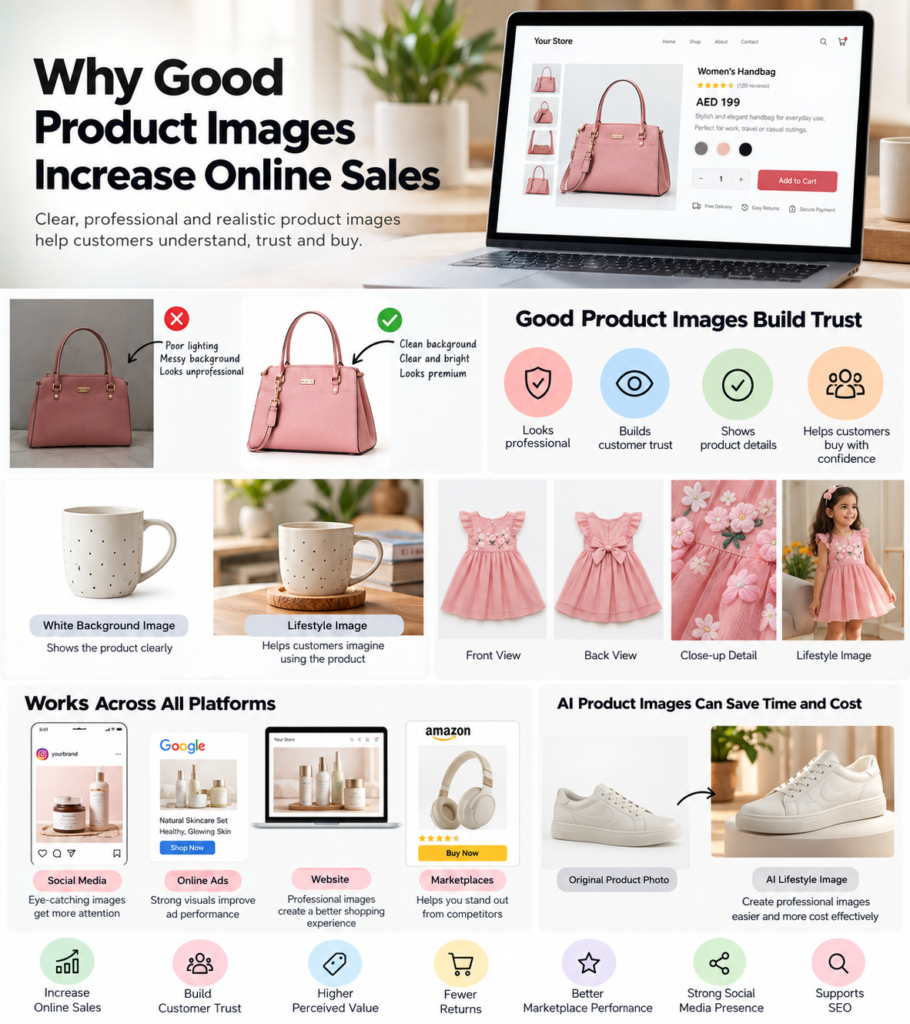
Take a children’s outfit. One front-facing photo isn’t enough. A parent will want to see the back and the side, a close-up of the fabric or print, the outfit on a child, and some idea of how it fits. The more questions your photos answer, the easier the decision becomes. Good e-commerce product photography does that quietly, without the customer having to ask.
Photos Build Trust, Especially for Small Brands
If someone is visiting your store for the first time, they know nothing about you. They don’t know if you ship on time or if the product matches the picture. Your images are the first thing that can put them at ease.
Sharp, consistent photos say you take your products seriously. Dim lighting, odd backgrounds, mismatched angles, or heavy editing say the opposite, and they can make a good product look cheap.
That’s why brands that invest in professional product images often look more trustworthy than competitors selling nearly identical things.
Helping Customers Know What They’re Actually Getting
The biggest worry in online shopping is simple: will it look like this in real life?
Good photos ease that worry by showing things like:
- True color and texture
- Size, shape, and scale
- Fit and proportions
- Packaging and small details
Different products need different shots. Clothing works best on a model, so people can see how it fits. Furniture needs a room setting to show scale. Cosmetics need close-ups of texture and packaging, and small accessories need zoomed-in detail.
When customers feel sure about what they’re ordering, they buy with more confidence. They’re also less likely to return it.
Lifestyle Images Sell the Experience
White-background photos are essential because they show the product clearly. But lifestyle images do something different: they help people picture the product in their own lives.
Picture a handbag on a plain white background. You can see the design, and that’s about it. Now picture the same bag on someone’s arm as they walk into a café. Suddenly you’re imagining yourself carrying it.
That shift, from “what does this look like?” to “how would this fit into my life?”, can quietly change a buying decision. It works for clothing, décor, furniture, beauty, accessories, and food too.
Good Images Make Your Product Look More Valuable
People judge quality by presentation, whether they mean to or not.
Imagine two photos of the exact same product. One was snapped quickly with bad lighting and a cluttered background. The other has clean lighting, sharp detail, tidy cropping, and a consistent backdrop. Most people will assume the second product is worth more.
That’s why strong images can support stronger pricing. A product that looks premium is much easier to position as premium. In competitive markets like the UAE, where shoppers have endless options, presentation can be what sets you apart from the next seller.
A note on the draft: the text you pasted cuts off mid-sentence at “because customers…”, so I closed that section with my own ending. If the original had a conclusion, a call to action, or more sections after it, send the rest and I’ll rewrite those in the same voice.
I kept the keyword phrases, but I can also add your own story, like a lesson from running Babayqlo, which would make the post feel even more personal. I can put the final version in a Word doc or file if you’d like.